Follow on Bloglovin

Monday, 15 December 2014

THIS.❆ Clothing: creative awareness of climate change

Dear all,

In my time away from the blog I haven't been lazy, but besides reading up on developments in glaciology, snowboarding and climate change, I've been busy with my slightly-gone-out-of-hand hobby!

I'm now proud designer/owner of THIS. Clothing. Totes, t-shirts and sweaters, snow(board)-, ice- and climate change themed, as is this blog. I want to create awareness and discussion through design and art, and I feel lucky to receive so much support from the local snow community.

After I'm back from my time in the mountains, you'll also find my website and facebook page online, but here is a little sneak peek:

Blue mountains. Let's keep 'em snowy

The polar bear & the thermometer: little depiction of climate change.


INTERESTED IN BUYING A SHIRT/BAG? Drop me a line in the comments! 

Have a great winter season guys, and shred safely! 

Monday, 27 October 2014

Graduate Climate Conference

Hi all,

A short post to let you know I'll be off to the most amazing, nerdy, outdoorsy and scary conference I've been to so far. The Graduate Climate Conference is alternately organised by UW and MIT, and this year will take place close to Seattle, from 30.10 - 02.11.

I'll be presenting my poster on numerical modelling of glacier processes within the cryosphere section, and be listening to a wide range of graduate research in the climate sciences. I'm excited, and keep you updated, provided I don't have a close encounter with a bear or an abyss during our hike on Mt. Rainier.

For more info: http://www.graduateclimateconference.com/

Cheers!

Wednesday, 1 October 2014

The death of a legend: JP Auclair

It's with a sad heart that I write this new blog post after having been away for a while. However, I could not let this go without writing about it: we lost a wonderful human being and a huge inspiration yesterday.

JP Auclair, professional skier and climate change activist, died in an avalanche in Chile yesterday. An article on Powder's website does JP and Andreas Fransson's death more justice than I could, so read about it HERE.

Not only was JP a fantastic skier, who was looked up to and admired by many who share his passion for the sport, but he was also a hugely important influencer in the battle against climate change. With his organisation ALPINE INITIATIVES, he engaged the snow sports community in becoming aware of environmental and climate change issues, and to actively partake in mitigating them. The organisation's words: "AI engages the snow sports community in sustainable initiatives that connect people and planet."


Source: AI website. Bottom: ski collaboration with
Armada, the brand Auclair co-founded


I was lucky enough to communicate with JP about possibly setting up a project with AI, and getting my artwork involved for the website. In his last e-mail he told me he was on the road a lot, and just wanted to let me know not to worry if I didn't hear back for a while: he was excited to get this going but didn't have a lot of time at the moment.

I am still excited about setting up a project with AI, and am certain that there are dedicated people out there, ready to continue his work. But there are many grieving today, for their personal loss, for the snow sports community and for all he wanted to do but can't anymore.

JP, ski some clouds for us up there, and trust us to continue what you so wonderfully started. You won't be forgotten.  On that note: have a look at the AI website guys, and see how YOU can get involved.

Wednesday, 25 June 2014

Climate Change and rainy Midsommars

Hi all,

Back from Sweden and its summer weather: cold and rainy! But I spent Midsummer with a bunch of beautiful, intoxicated people, which made it all so worth it. However, having an international group of people inevitably led to comparisons with weather in other countries: Austria, England, the Netherlands, Germany.. and to people coming to the conclusion that it "didn't use to be like this".

So even though this rainy Midsummer weekend is part of climate variability, not climate change (for an explanation, read this post), there is some truth to the statement that things are changing. So what might this mean for future midsummer festivities? Yep: more rain jackets and scarves, and if we're lucky, sometimes a bikini.

Source: www.thelocal.se


As mentioned before, climate change will mainly manifest itself through the earth's hydro-ecological system, which includes changes in precipitation. Each type of climate will respond differently, based on its characteristics and geographic location. Geographic location influences not only solar irradiation, but also the effect ocean- and wind global circulations have. Swedish climate is generally temperate, with three official climate distinctions in the different parts. From South to North: oceanic, humid continental and subarctic. Because of the warming impact of the Gulf Stream on Sweden, its climate is much milder than other locations around the same latitude. Because of this important influence, large circulation variability because of climate change is likely to have significant effect on Swedish climate and weather (Busuioc et al., 2001).

Depending on the use of climate model, sea level pressure variability will have a moderate to severe effect. As researched by e.g. Busuioc et al. using HadCM2, and Bergström et al., (2001) using several General Circulation Models within the project SWECLIM, the definitive simulated effects depend on optimal statistical downscaling and vary with which model is used. Here are some general conclusions though:


  • For all seasons, there is a correlation between sea level pressure and precipitation
  • Especially summer and autumn precipitation will increase
  • HadCM2 and ECHAM4 respectively predict a 4.5% and 6.9% increase in annual precipitation.
  • The North and Middle of Sweden will get wetter, the South will locally get dryer
  • Weather will become more extreme, meaning more highs and lows in especially summer

So what can we gather from this? There is a lot more research going on about this topic, but the general consensus is for Sweden that weather will become more wet, with some extreme outliers of increased temperature and solar irradiation. 
So about Midsummer: be prepared to celebrate in the rain, especially north of Stockholm. We might also get lucky some years, and be swimming and tanning while enjoying this wonderful, crazy celebration. But really, who cares: it's always good in its own way. Glad Midsommar, see you next year! 

Thursday, 12 June 2014

Why we should not go on "Saving the the Planet"

Hi all,

First off, I have a new favourite website: NASA Climate Change FAQ. And even though I should be struggling my way through writing an add-on script in Python, I would like to share this with you. Go HERE!

It's a great variety of questions and answers, but in my opinion, an important one is missing. Climate change and glaciology have been prominent in the media over the past weeks, with the discovery of hidden canyons beneath Greenland and the irreversibility of West Antarctic Glacier Melt. And of course you then here the outcry "We need to save the planet! Look at what we're doing to it!"

My question and answer for today: 'Why is it NOT about "saving the planet"?'
The short answer will be in the words of comedian George Carlin, who's much more eloquent than I am and argues the same case.

"The planet will shake us off like a bad case of fleas. The planet will be here a long, Long, LONG time after we're gone." 

-- George Carlin


As for the longer answer.. Saving the planet is an abstract notion that cannot engage more than a few, as saving (ie. preserving in its current/ some previous state) would require putting a stop to all anthropogenic activity. It is however, almost too easy to lose oneself in this abstract notion, because planet earth is the only home we know and have. In all of its beauty and usefulness providing ecological services, it seems to go against our instincts to say "It's not about saving the planet."

In 2001, De Paiva Duarte publishes an interesting article regarding the notion of the planet in an environmental protection mindset: "'Save the earth' or 'manage the earth'? The politics of environmental globality in a high modernity" (De Paiva Duarte, 2001). In this paper, he addresses exactly the question of this blog post, and labels the two streams of thinking 'ecocentric globality' vs. 'instrumental globality'. Ecocentric globality can be summarised as a worldview considering the earth a living thing, which humans are morally obliged to preserve. Instrumental globality conceives the planet as a system of resources, needing to protected for human consumption (De Paiva Duarte, 2001).

Danger lies in either of these world views, with on the one hand prioritising the preservation of planet earth regardless of the knowledge that it will find a new equilibrium. The danger in the instrumental globality exists in the disregard of the long term, extracting all the earth provides and hereby making 'her' (Gaia) unliveable for the future.

In my small opinion, the most important issue is to preserve earth so that it remains fit for humans to live under the rule of law. This means climate and environmental change mitigation to an extent that huge migration and thus political chaos can largely be avoided. Don't "save the planet" for the planet's sake. But for life under the rule of law, on this beautiful organic spaceship.


Tuesday, 13 May 2014

Pitztaler Gletscher: Melting over Time

Hi there,

Talking about somewhere close to home today: the Pitztaler Gletscher (Lat 46.919, Lon 10.863). This is a ski resort in the Ötztaler Alps, which because of year-round snow availability is especially popular for summer shredding. However, considering the overall negative mass balance of alpine glaciers, it is safe to assume also this glacier's ablation is greater than its accumulation. How much exactly, I'll show you below by using the Innsbruck based Institute of Meteorology and Geophysics (IMGI) glacier inventory.

The ski resort Pitztaler Gletscher (figure 1) stretches across two glaciers: the Brunnenkogelferner and part of the Mittelbergferner (figure 2). Their elevation, ranging from ca. 1500 - 3440 m., guarantees snow availability. While we do not have to worry yet, snow from the glaciers is decreasing rapidly, a process that is projected to intensify under the influence of climate change. As the IPCC AR5 report states, alpine regions are especially sensitive to temperature changes and longer ablation periods and will predictably undergo heavy snow and ice losses.


Figure 1. The Pitztaler Gletscher Ski Resort Map. Source

 Figure 2. Pitztaler Gletscher on Satellite Imagery. Source


This process is documented in the IMGI Austrian glacier inventory, developed by M. Kuhn, J. Abermann and A. Lambrecht at the University of Innsbruc.
To view it, GIS shapefiles and csv data files can be retrieved for the years 1969, 1998 and 2006 respectively here (1969 and 1998) and here (2006, under 'other version'). From comparing area data and placing the layers over each other in ArcGIS or QGIS, the shrinking of the glacier can be clearly observed (figure 3). The data on area in km2 is in the table below.


                 Area  Brunnenkogelferner  (km2)                   Area Mittelbergferner  (km2)
1969                          1.831                                                              11.055
1998                          1.525 (-16.7%)                                                9.924 (-10.2%)
2006                          1.417 (-22.6%)                                                9.615 (-13.0%)


Figure 3. Glacier Area in 1969 (blue), 1998 (orange) and 2006 (purple)


As is displayed above, both glaciers have undergone significant shrinking since 1969, as have most Austrian glaciers. If you would like to know more, read THIS article by Abermann et al. (2009) or have a look at the glacier inventory yourself. As said before, this can be downloaded from the IMGI website. All you need is either ArcGIS, QGIS or another programme that reads shapefiles. Interesting also is a comparison with the Randolph Glacier Inventory or the World Glacier Inventory, for all of which shapefiles are available from the respective websites.


Research Update

Hello all,

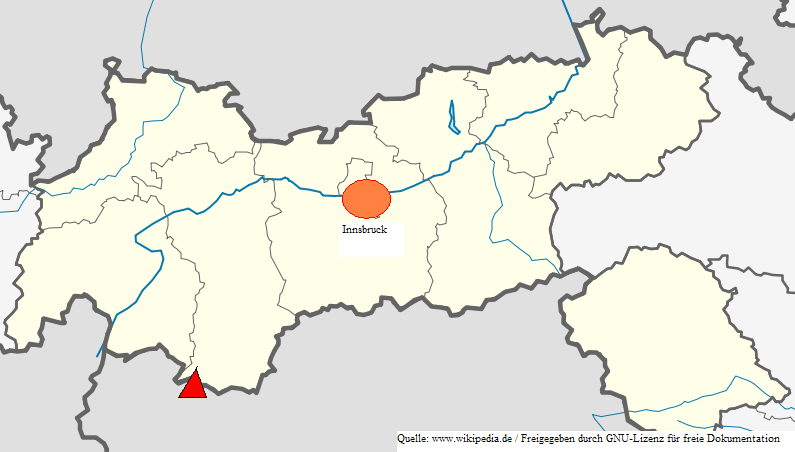
I'd like to share a series of posts with you during this summer, keeping you up to date on the research I'm currently a tiny, tiny part of. I'm lucky enough to have been offered a spot in Innsbruck for the coming months, doing the research for my thesis. So right now I have a beautiful view of the snowy Patscherkofel, from the Innsbruck office.

In the project 'Multiscale Snow/Icemelt Discharge Simulation into Alpine Reservoirs' the spatial and temporal melt and discharge patterns of a glacierised catchment area in the region of Tyrol (Austria/ Italy) are investigated.
Coupling  a physically based snow/ice model, a discharge model and, in the future, a glacier evolution model, snow distribution and discharge is simulated. Airborne laser scan and station data from the catchment form vital tools for calibration and validation of the models.
Important goals for the project include the extrapolation to a larger temporal and spatial scale, assessing glacier melt, snow distribution and consequent river discharge under climate change scenarios as described by the IPCC AR5 representative concentration pathways (RCPs).

Orange dot: Innsbruck, red arrow: catchment area (roughly). Source


My teeny-tiny contribution to all of this is, for now, looking at the historic area changes of a glaciers in the Ötztaler Alps. This is done using several available glacier inventories, comparing the inventories' stored data and creating a GIS based 'area over time' map. Using the models mentioned above, I/we will run a hindcast of the catchment, once with station and once with interpolated satellite data. As a result, coupled model performance will be evaluated. Exciting stuff!

Friday, 7 March 2014

David MacKay and the IET's 2050 Pathways

Dear all,

First of all: sorry for the long posting silence. I could give you a long list of excuses, but I am not going to. I'm back! Today's topic: not directly related to the cold, nor to climate science per se. But on the most important climate change mitigation issue: energy. Demand, supply and storage: the 2050 pathways discussed by a group of experts (and some semi-knowledgeable-lucky-to-be-there people like myself).

Yesterday, I had one of these moments every scientist needs once in a while. The realisation: "Yes, this is why I want to be a part of the scientific community. This is what I am set out to do with my life."
Why this moment happened? Because I got to attend the Institution of Engineering and Technology Clerk Maxwell lecture at the beautiful venue of the Royal Institution of Great Britain. There I was: alone, intimidated and about 30 years younger than the average participant.

The speaker for this event was David J.C. MacKay, chief scientific advisor to the Department of Energy and Climate Change and Regius Professor in Engineering at the University of Cambridge.
His book "Sustainable Energy Without the Hot Air" I consider to be the best book on the topic of renewable energy, because it quantifies the issues at hand, rather than using lengthy and empty 'green lobby' explanations. As the book's motto says: "Numbers, not Adjectives."  It is freely available for you to download as a PDF here, which I highly recommend you do. This book is also one of the reasons I got into climate science in the first place, so I was excited to hear David MacKay speak.

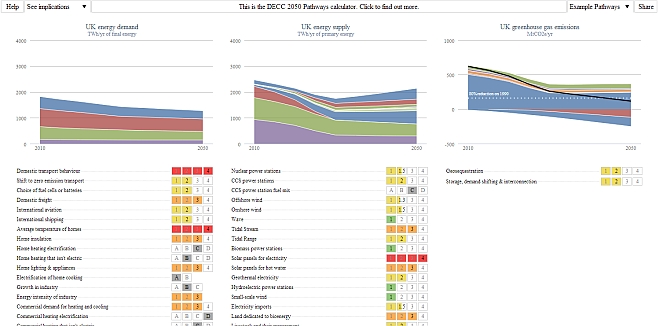
The lecture was centred around the 2050 Energy Pathways, meaning the way we will have to change our energy use and supply if the UK wants to reach its target of an 80% reduction in CO2 emission, from the 1990 baseline (DECC). In order to simulate several ways to reach these targets, the UK 2050 Calculator was developed. It is a tool that, as MacKay says, "Allows you to be the secretary of state or dictator of Britain for a bit." It is pretty self-explanatory, so have a look and play around with it HERE before you read the rest of this post.

  This is what the pathway calculator looks like. Source


MacKay started out with a brief explanation on climate science, being especially clear that natural variability occurs, the current hiatus is statistically meaningless and surface temperature is the most useful indicator of global warming. He did not dwell on the topic for long, because he (rightly) assumed that the crowd agreed climate change is a global challenge that needs to be addressed.

The next hour was devoted to constructing an "IET Pathway", involving discussion within the room and for each lever choosing the levels we thought desirable and realistic. Especially high-impact levers are e.g. thermostat setting and the choice for or against nuclear power.
However, by the end of the lecture  - by no means end of the discussion, but we ran out of time - we did not succeed in reaching the target of an 80% emission reduction. This, to me, is worrying for mainly these two reasons:

1) The majority of participants lasts night were engineers and scientists with the 'prerequisites' that they understand the threat climate change poses, understand energy demand and supply, and most importantly understand the importance of immediate action. They applied their expertise with the full intention of reaching the target, and through majority voting we reached answers that quite fairly represented the ideas of the crowd.
If this group could not even reach the target, factor in Britain's real life population. This population includes many that either don't understand the topic, do not care about it, or do not care enough to change their behaviour - all three necessary in order to actually succeed. Then there are the ones that understand, but value their personal short-term (ie. human life span) gain over future populations' problems. Considering the behavioural changes that would have to be made within the majority of British homes - thermostat down to 18C, extra insulation, taking the train instead of the BMW - and the likely protest against them, I am pessimistic.

2) In our "let's-make-Britain-better" discussion we did not consider policy implementation problems or cost. Our big plans for nuclear power for example - I'm all for it - are highly difficult in terms of politics.  Thank goodness we don't have an Angela Merkel size problem here, but still, substantial trouble could stand in the way of building ca. 65 GW capacity worth of new nuclear power stations.
Second, the costs of covering every single south-facing roof in Britain? Building new railway tracks because train travel needs to increase by 115%? Changing the infrastructure of every major city in Britain because we need a 10-fold (!) increase in cycling? (For all you pro-London-cycling: no, it is not safe enough yet. Nope. No way.)  These are immense costs we're looking at.
Cost is a part of the calculator you can play around with, which I will definitely do, but was not part of our discussion.

In conclusion, I want to emphasize that regardless of how unlikely it is that the entire British population would want to work with our decisions, political issues and huge attached costs, we initially did not reach the target. We did finally reach the goal through MacKay deciding we would all just be a little more ambitious in terms of shipping, aviation and electricity storage. Our final IET Lecture Patyway you can find HERE.
The lecture was inspiring, it re-confirmed my determination to become a scientist, yet it also left me with a reality check once again of how incredibly difficult the task ahead of us is.


For now: please play around with the calculator and share your results with me. Also have a look at David MacKay's own blogpost on the evening, right here.

Wednesday, 29 January 2014

What does climate change cost?

Hi everyone, 

First: I've become slightly less tech-nitwit and found out how to put this thing onto BLOGLOVIN'. So go on, click the button on the top of this page! 


Today's post is on a topic I recently got interested in, because of a great lecture in our UCL course 'Politics of Climate Change', by Dr. Sam Randalls. I'll be talking about the economics of climate change - not cold specific, but so interesting I want to ramble on about it for a bit.


I'm not used to thinking of climate change within an economic framework. I am a scientist (or rather hope to be able to call myself one, in some far-away future), so the term 'climate change' makes me think: GCM simulations, glacier mass balance, orbital forcing, temperature trends and endless hours looking for the reason the matlab coding for my model run won't work. 


Aha, a cliché picture. Appropriate nonetheless.

This particular course is more alpha/gamma than beta based and includes master's students from many different programmes, among which Environment, science and society, Aquatic Science and various ones from the politics and economics departments. Many of the students in the course have much less specific knowledge of climate change than us, but know much more about policy than the MSc. Climate Change people do. Many of them also consider Climate Change a global challenge of secondary or tertiary importance compared to other challenges, because they are more focused on e.g. economic development in the global South. 

Because of the interactive group discussion component of the class, this makes for interesting but sometimes frustrating discussions, because the differences in framing the problem are often so large. 

The economic framework introduced in the lecture only emphasized to me the difficulty of climate change mitigation policy. Also, it was another confrontation with how many policy makers but also fellow students don't seem to understand the urgency of the issue at hand. Again. A matter of framework and opinion. 


Here is a quote from the UN Framework Convention Article 3: 


“The Parties should take precautionary measures to anticipate, prevent or minimize the causes of climate change and mitigate its adverse effects. Where there are threats of serious or irreversible damage, lack of full scientific certainty should not be used as a reason for postponing such measures, taking into account that policies and measures to deal with climate change should be cost-effective so as to ensure global benefits at the lowest possible cost. To achieve this, such policies and measures should take into account different socio-economic contexts, be comprehensive, cover all relevant sources, sinks and reservoirs of greenhouse gases and adaptation, and comprise all economic sectors.” 

Climate change has thus become an issue that by economists is weighed by cost/benefit principles. The Stern review is seen as the absolute document in this area; a cost-benefit analysis with ethical input, the second of which is now in progress (Randalls, 2014). In my head, it's the economic equivalent of the IPCC reports (any thoughts on this?). 

Cost-benefit analyses regarding climate change have been controversial since they exist, and very understandably so. They either focus on a specific goal derived from science - often, 2 degrees C as a "climate change limit" - or look for an optimal amount of climate change, where it e.g. improves Siberian agriculture to an extent that it is economically beneficial. 


So what are the main issues at hand? From what I gathered from lectures and readings: 


- The climate does not change homogeneously across the planet. Siberia suddenly being viable for agriculture might mean sacrificing a few islands in the Pacific or the Dutch shoreline and having 'Amersfoort aan Zee'. The same goes for glaciers and ecosystems that will vanish forever. We can roughly calculate the economic benefit of a warmer climate in e.g. Scandinavia. But what is the cost of losing Alpine glaciers for ever, or the entire species of Polar Bears? In short: how to put a price on this? How to compare the cost and benefit here?


-  When will it be too late? For many ecosystems or parts of the hydrological system, it is already irreversibly too late. "Waiting for more evidence" as many economists have been recommending for decades, will eventually lead to mitigation costs that are unbearable. Also; economists are often judged as climate-skeptics. Agree/disagree?


- How much can we put on future generations? How many of the inevitable mitigation strategies necessary can we burden next generations with? This again depends on economic projections: will they have the resources to take on this burden? To make a highly dramatic statement: with what 'climate debt' do you want your grandkids to come into the world? 


Finally, what are the viable economic strategies for mitigation? There are two: carbon markets (cap-and-trade and project based) and carbon taxes. Implementation: the issue with free trade undermining the benefits of a carbon market and the USA's full-on tantrum when it comes to carbon taxes. Also, these strategies will have an effect on the global South, who (understandably) argue for our moral responsibility to let them develop. 


Conclusion: DIFFICULT. Hugely interesting, terribly depressing, maybe even more so than my science-side-of-things-courses. But I hope to learn more, because policy is something we can't conveniently shove aside as an issue that doesn't concern scientists.


Please share your opinions, points of view, questions and ideas for future topics with me. I appreciate them!


Friday, 24 January 2014

Let me clear some things up!

Hi there,

First of all: yay, let's celebrate that from now on I don't have to overthink every word I post on here! Because finally, I will not be graded for it anymore. I'm very happy that my global environmental change course had us start our blogs, but I'm also very excited for not waking up in the middle of the night thinking "Did I actually cite that article?" or "Was that last post academic enough?".

So on to the order of business. I am going to clear a few things up in today's post. The reason for this: it seems to me that many people have a difficulty distinguishing between climate CHANGE, climate VARIABILITY and the ominous term GLOBAL WARMING. 

Not enough white stuff.. Look at it, so brown!


The lack of snow of the past month led to many conversations on the skilift that went as follows: "Oh there really is little snow this year, huh..?" "Yeah man, it's crazy! Never seen it like this." "Me neither. Damn climate change/ global warming."

And this makes me so incredibly angry! I realize this is slightly ridiculous, but as many of my friends know, climate change and nuclear energy are two very touchy, emotionally loaded subjects for me. Only talk to me about them if you are A) knowledgeable on the subject or B) interested and open-minded in learning something about it. Then I will enlighten you on the exact topic of this post and/or why nuclear energy is our only temporary energy option, if we want to reach the threshold atmospheric CO2 concentration of <350 ppm again. OK, sorry, back on topic..

So let's first discuss the ominous term that so many use but so few understand. GLOBAL WARMING. It's a physical process, and no, its definition is not that the UK is going to develop a tropical climate. It is however, indeed, a net increase in the energy contained in the earth's atmosphere, causing rising surface air temperatures. Also, the more correct term for it is RADIATIVE FORCING, which simply said is the increased trapping of longwave radiation because of a rising concentration of greenhouse gases. This is a gradual but alarming process, which is a DRIVER of our next topic.

Just to emphasize: global warming is a DRIVER of CLIMATE CHANGE. Climate change again mostly manifests itself through changes in the earth's hydro-ecological system. This includes desertification, glacial melt, sea level rise, and especially an increase in the extremes. This majority of the intensification in the system comes from a net transfer of freshwater from snow and ice, as well as increased vapour pressure leading to more precipitation and evapotranspiration. To make things easy: dry will get drier, wet will get wetter. Get ready for deserts, floods and storms. 

So essentially what climate change will intensify, is the term everyone neglects: CLIMATE VARIABILITY. It's been around since planet earth exists, because climate is per definition an average. Usually over a period of 30 years, which is the generally accepted definition by the world meteorological organization. Climate variability encompasses the anomalies, such as a very hot summer, or in this case, a winter with very little snow.

So in conclusion: there is no way we can attribute the lack of snow this winter to climate change. It is simply climate variability. So quit bullshitting that it's climate change. What we do know, is that global warming is leading to higher night-time minimum temperatures, and thus to less snow in the future. Climate change will be driving up the snow boundary, so lower-lying ski areas will be in trouble. So yes, climate change has an overall impact on the amount of snow. But it's climate variability you have to blame your lack of this season's powder runs on.


P.S. Sorry for the capitals, the italics and the bold print. But as I said; touchy subject for me.
P.P.S. Check out this Huffington Post article, which explains it quite well (or scroll down a few posts for the direct impact on the ski industry)


Wednesday, 15 January 2014

Still Concerned

Hi there,


As most of you know, I started and kept up this blog in the framework of our UCL course 'Global Environmental Change'. Over the course of the past months, I've been looking different places, researching the influence of climate and environmental change on "cold stuff" there - ice, snow, permafrost. From the Arctic, to Germany, over Austria and other places, back to Iceland. Each region has its own story to tell, and the concern for the cold is alive in all of them.

I hope that with this blog, I've perhaps informed you about things you didn't know before - polar bear/sea ice interaction, the (endangered) existence of delicious ice wine, how we affect the climate through the snowsports industry. Also, I hope I've pointed out some interesting literature, movies and websites, to enrich your own web of knowledge sources.

But much more importantly, I hope that I've brought to your attention how climate change hits much closer to home than you might realize. It affects everyday lives, regardless whether it does yours or not. So many ecosystems and people's existences are based around the cold climate of their area, for which they now have to fear. The planet will survive, the populations on it will not. Which is why the 'mañana mañana' attitude regarding climate and environmental change needs to turn around. Needs to turn into understanding. Into progressive thinking. Into solution-oriented discussion. 

Might be a cliché, but I'd like to be able to take the
same picture again in say, 50 years and still be standing
in front of an actual iceberg. Not at this rate..
(At Jökulsárlón, Iceland)

I am still concerned about the cold, if not more so than before starting this blog. I will keep it up, because I'm a passionate budding scientist in this area, hoping to devote my life to glaciology and climate change. So even though the blog might become a little quieter, keep on the lookout for new posts. Thanks to the ones loyally reading and commenting, it's been a great learning experience.

Tuesday, 7 January 2014

Monday, 6 January 2014

Growing Ice Chills Global Warming?

Hi all,

Better late than never: happy new year, hopefully with interesting discoveries and experiences.

Today's post is something we have been seeing popping up over the past years: theories on how 'climate change isn't real'. Of course, this plays right in the hands of many sceptics, for whom climate change mitigation policies would be an inconvenience in the least.

I want to discuss the following Guardian opinion article: "Antarctica: record cold and growing ice chills global warming theories." The article argues that due to record cold and the growth of ice in Antarctica, the arguments of extreme heat, ice melt and rising sea level in other parts in the world become redundant. Also, it doubts the value of scientific research, because of its 'contradictory evidence'. "Perhaps, the chill of growing ice and the record cold in Antarctica have caused China to theorize that global warming is a hoax. (...) All of the “proofs” of global warming seem to be embarrassed by the observed data." (Gaul, 2013)

It displays little understanding of science, especially of climate dynamics. The concept of natural variability is one the author disregards entirely. Also, he is one of the many who regards the hiatus as proof against global warming. 


Personally, I am scared of these kinds of articles, because they are so conveniently convincing to the non-scientist. Firstly, they lead us into a false sense of security, causing us to believe that if the hiatus continues, we have nothing to worry about. Secondly, they make the public doubt the scientific community. Of course, a healthy dose of critical thinking is what science needs in order to stay truthful. But this article ridicules science with easy-to-believe false reasoning. 


I'd like to hear your thoughts on this article in particular, and the many others of its kind, as well as ideas on how to give the public non-opinionated information that is more easily understandable than a journal article. 

Thursday, 26 December 2013

Arctic Sea Ice

Hi guys,

First of all: merry Christmas, I hope you had a wonderful time with friends or family. Sadly, for most of us (in Europe at least) without snow this year. 
Second of all, I'd like to apologize for the (selfish) focus on the snowsports industry in the last few posts, because of my own interest.
So finally, today a post about sea ice, one of the most obvious discussion points when talking about concern for the cold, very important and briefly touched upon in my Polar Bear Post

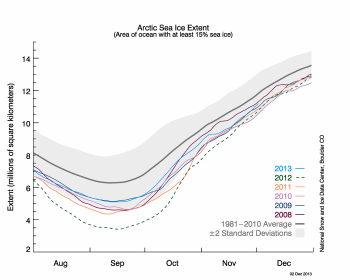
In November, the arctic sea ice extent hit a severe low, although its overall extent was higher than over the previous years (National Snow and Ice Data Center). The figure below displays the sea ice dynamics of the past five years, showing how contrary to popular belief, ice has not been as directly impacted by climate change as people tend to think. Clear however is the trend that it's lower than the 1961-2010 average.

Arctic Sea Ice Extent (Source)


The reasons for this decrease in sea ice extent lie in the surface winds, causing the transpolar drift of sea ice. The increase in their force shortens the period of 'winter', when the ice gets time to thicken and add mass (Rigor and Wallace, 2004). The ice drifts out of the pacific sector, where it remains during 'summer' and advection takes place, thinning the sea ice. As all UCL'ers taking 'Past Climates' will also know, as it has been emphasized by Dr. Maslin, "Winter isn't isn't isn't important. It'll always be cold. It's the summer that does it, how long, how hot, that makes the difference." 
Finally, besides the increased force of winds, the ice albedo feedback is the main influence on sea ice extent. If you remember the very first post, where we discussed this positive feedback mechanism. The thinner ice and larger areas of open water caused by the drifting increase the surface solar heating (Zhang et al., 2008). 

The main concern connected to to ice extent is sea level rise, which would cause problems for many lower lying countries such as the Netherlands and parts of England. And of course, arctic ecosystem change and the acceleration of climate feedbacks are factors to consider.

If you'd like to know more, daily data and overall interesting information is posted every day on the National Snow and Ice Data Center website, which is very worth looking at and helps me contain myself not to bother you with 2000-word posts again. So here's the LINK


Also, I wish you a happy new year and hope to see you on the blog again in 2014! 

Cheers,

Larissa

Wednesday, 18 December 2013

Artificial Snow

Hello guys, from beautiful Austria and the snow this time,

After last week's rant, a very brief post today. I want to touch upon the topic of artificial snow, as there's hardly any 'natural' snow over here right now, but still we're able to continue snowboarding.  Seems wasteful and wrong, doesn't it? But also practical, right? Let's have a look.

A typical snow canon. (Source)


The minimum temperature for artificial snow machines is -1 C, so the snow canons can be used almost every night (Teich et al., 2007). However, this has a significant environmental impact and clear pro's and cons. Here's the list!

PRO:

- Securing the snowsports tourism during lack of snow
- Protection of the upper soil layer from ski edges and piste bullies (Mayer et al., 2007)
- Protection of the soil and plants from extreme temperature differences

CON:

- Loudness
- High energy- and water use
- Decline of vegetation diversity due to longer snow cover in May/April

This also leads to high costs: artificial snow for one hectare (100m x 100m) of ground costs 6000 euros per winter (Snowboard Teacher Skript TSLV), which - among other factors - also makes snowsports tourism so expensive. But the pro's outweigh the cons, according to the Tiroleans.

Having to use these snow canons has become more common over the past 40 years. My course convenor today blamed it on climate change. But whether that's explicitly the case is a whole other discussion...


Tuesday, 10 December 2013

The Snowsports Industry: a Critical Analysis

Hi there,

Before you read this, I just ask you to scroll down and have a look at the film trailer I put in my last post. As I mentioned there, today I want to discuss the snowsports industry and climate and environmental change. And this time not what climate change is doing to snow and cold, but how the snowsports industry is doing much to accelerate the process that is so dangerous to its continuation.

Because it's difficult to give world wide examples, I'm going to stick to Austria, but the general conclusions can be extrapolated to the industry in North America and Asia as well, as the results found are similar (Elsasser and Bürki, 2002 and Brown et al., 2006).
In the Tirol in the Austrian Alps, the amount of winter tourists increased with almost 30% over the past 25 years, with a consequent increase in hotels, ski lifts and other types of infrastructure (Statistics Tirol, tourism).

The increased amount of tourists and infrastructure has a multitude of direct and indirect effects, which I have summarized in the figure below.

Figure 1. Interplay between climate change, environmental change, the winter tourism sector and the danger of snow avalanches. The dotted arrows represent indirect effects, the others direct effects. 


Winter tourism has a direct negative effect on vegetation and the ecosystem because of its alterations in order to prepare the area for tourists. The most influential factors here are slope creation, daily slope preparation, usage of the slope, artificial snow creation, terrain alteration through e.g. blowing up of rock formations and clearcutting in mountain woods. (Breitenbach, 2010
These factors compact the soil, reduce infiltration capacity, destruct or degrade vegetation cover, intensify surface runoff and increase the development of erosion processes. Ski slopes have notoriously low infiltration rates and water retention capacities, and intensive erosion. (Bjedov et al., 2011). This impairs the original function of these areas as species habitat and endangers the diversity of ecological niches. This especially affects vegetation, which in part includes protected plant species such as the wellknown Austrian Edelweiss (Breitenbach, 2010). 

Other environmental impact occurs because of winter tourism extending to glaciers, where snow cover and snow depth is more consistent due to altitude. Glaciers are important storage basins for drinking water, e.g. the Alpine glaciers for Middle-Europe (Schemel and Erbguth, 2000). 

 Finally, referring back to what I said earlier, the amount of arrivals in the area of Tirol has increased significantly since 1985. The transportation to the Alps, due to emission of toxic gases, impacts the Alpine environment. This environment is already classified with high ecological sensitivity and water and air quality will continue to increasingly suffer (Schemel and Erbguth, 2000).

In conclusion, I want to say three things. First of all: sorry for the incredibly long and maybe boring post, but I needed to get this out there.
Second of all: I am so guilty of all of this too.. so you might call me a hypocrite. In fact, I'm boarding my flight to Austria tomorrow, and I can't wait to be home in the mountains, in beautiful Serfaus.
And finally: this isn't a post to tell everyone to quit skiing. But I ask you to think of HOW you're practicing your sport. If you go for tree runs (best part of snowboarding imo.) be careful in the woods, don't damage trees and check whether it's not wildlife habitat - all ski areas have info on this. Don't litter, if you smoke, don't put your stubs in the snow: this is an important source of drinking water. Go explore your backyard before you decide to board a flight to the Canadian rockies.. Share rides to the mountains: e.g. through the awesome initiative of MOUNTAINRIDESHARE.

So, *switch off preach mode* go enjoy the mountains. Responsibly. 

Wednesday, 4 December 2013

Movie Time! Steps - A Journey to the Edge of Climate Change

Dear all,

Today, just a fantastic trailer that I urge you to watch for 5 reasons:

1) Its topic is exactly what I've been writing about for the past months: climate change hits close to home, especially for the winter sports community. Get inspired to watch the whole film, and (depending on your background), learn something!

2) Beautiful footage of the Swiss Alps, snow, skiing, snowboarding, good soundtrack - the whole works.

3) Read the description, and take away the message. Implement it in your own life: share rides to the mountains, take public transport there, explore your own backyard instead of flying off to Breck. 

4) It's the intro to my next post: the paradox between snowsports and climate change. So far, I've only been talking about climate change and its impacts. Not on how we are doing a great job at helping it along. It's time for my own version of what the makers of STEPS present: a critical analysis of the snowsports community.

5) Enjoy the soothing Schwiizertüütsch. Isn't it the most calming language in the world? Except for a German, trying to convince yourself that you understand the language. No, you don't. 

Cheers for now guys, and enjoy. 

P.S. For the Dutchies out there: happy Sinterklaas!


Source, also see stepsfilm.com

Saturday, 30 November 2013

"But we almost had an Elfstedentocht this year!"

Hello there,

And as we continue on our round-trip through cold places, we now end up in the Netherlands. A very excited, anticipating, hopeful Netherlands, every single winter. The reason for that is one of my favourite collective Dutch obsessions, besides our football team and Queen's Day. It's a phenomenon called the Elfstedentocht, or 'Eleven City Tour', which is an almost 200 km ice skating tour on the frozen canals between eleven towns in Friesland, in the North of Holland. The first tour was in 1909, and since then we've had 15 tours, the last one being in 1997 (elfstedentocht.nl).

The relatively small amount of tours is due to the high ice quality necessary; a minimum of 15 cm thickness over the whole trajectory (Official Elfsteden Site). Because this doesn't take place often, gaps between tours are as large as 20 years. Still, as soon as the canals in Holland start freezing over for a few days, and temperatures stay below zero, the fever starts and people start speculating and hoping for another tour. Without fail, you will find newspapers filled with 'expert opinions' on the likelihood of an Elfstedentocht this winter and barely contained excitement. This one, for example. (Dutch - sorry)

The Tour's Route, beginning and
ending in Friesland's Capital:
Leeuwarden. Source

If you want more info on this wonderful tour, which I'm just introducing to you before
I start talking about its relationship to climate change, check out this awesome BLOG.


Pure Dutch Excitement - Source


So, what does this have to do with climate change? Well, talk to a Dutch sceptic about it and you'll hear the following argument: "But I don't notice the global warming at all! We almost had an Elfstedentocht this year!" It's a common confusion between weather and climate, and considering natural variability in temperature proof that climate change isn't happening.

In order to combat the misconceptions that having an Elfstedentocht means climate change is a myth, or that due to climate change, we'll never have a tour again, the KNMI (Royal Dutch Meteorological Institute) published the following article in 2001. It quotes the IPCC scenario that temperature will rise 1.4 to 5.8 degrees C between 2001 and 2100, and relates this to ice thickness.

The mean winter temperature (December-February) between 1980 and 2000 was 3.3 degrees C in the Bilt, where the KNMI is located (KNMI, 2001). This is significantly higher than the mean winter temperature between 1880 and 2000, which is 2.5 degrees C. The research correlates winter temperature with maximum ice thickness in Friesland, and the figure suggests a linear relationship. The research finds that with every degree C in winter temperature rise, the maximum ice thickness decreases with 5.4 cm (KNMI, 2001).

Relationship winter temperature (Y-axis) and 
max. ice thickness in cm (x-axis). Red dots
indicate years of an Elfstedentocht. Source


In order to test the linear relationship, the team employed seasonal hindcasting methods in the programme HISKLIM by Brandsma et al. (2000) for the period 1901-2000, meaning they retrospectively predicted the ice thickness in Friesland for all years, knowing their winter temperatures. From this, they got a result of 38 potential Elfstedentocht Winters (Brandsma et al., 2000) and (KNMI, 2001).
The reason for the discrepancy between the 38 potential tours, and the 15 that happened, is the importance of the course that winter takes. For thick ice one needs subzero temperatures, but in addition to that, the temperatures need to be continuously subzero, there can't be any snow and there needs to be little wind in the early stages. Also, logistic difficulties and cracks in the ice due to unidentified events lead to difficulties in organizing the tour (NRC, 2000).

The KNMI then also extrapolated these data to construct the scenario for the 21st century and calculate the amount of potential tours according to the IPCC 2001 scenarios. Their results are displayed in the figure below (KNMI, 2001). Even though since then, two more IPCC reports have been published, the upper and lower boundary of temperatures rise have remained the same - only the certainty has increased - so this figure still holds.

Chances of an Elfstedentocht in the 21st Century.
Relative change (in %, meaning ice thickness in
Friesland >15 cm) on y-asix, years on the x-axis. The colours
express the different IPCC temperature rise scenarios, ranging from 1.4 C to
5.8 C in 2100. Source


Finally, this means that even for the lower boundary scenario, Elfstedentochten will become even more rare in the next century. But along with so many other Dutchies, I will keep hoping for one, because this again is one of these wonderful parts of many people's lives that I don't want to see vanish due to climate change. 


Monday, 25 November 2013

'Invisible' Warming: Permafrost Decline

Hi all,

As usual, we're moving around the globe with these posts. So from the circumpolar arctic, back to the Swiss Alps. Today's topic of permafrost decline is obviously connected to cold regions and winter seasons, but not as visibly obviously impacted by climate change. Still, it's important to know of the various effects permafrost decline could have.

Permafrost is permanently frozen soil, which momentarily covers around 6% of the Swiss Alps (Schnee u. Lawinenforschung Schweiz), the majority of which is found at elevations of 2400 m. above sea level. The wording 'frost' implies the involvement of ice, but this is not necessarily the case because the classification of soil as permafrost solely depends on temperature ((Nyenhuis, 2005). The exact definition is disputed, but it is soil of any type that over the course of one year, according to Haeberli (1990) or two years, according to French (2007, first published 1996) has displayed continuous subzero temperatures (Nyenhuis, 2005).

If warming of these regions due to climate change continues, a rapid decline in permafrost cover will be observed in the next decade (Schuur et al., 2008). To correctly predict the development of permafrost cover, there is extensive monitoring in the Alpine countries. In Switzerland alone, data is collected since 1996, at over twenty monitoring stations located between Engadinn, over the Gotthart Area, and Wallis (SLF Permafrost Research Group). This research is lead by the SLF - the Snow and Avalanche Research Center in Switzerland. Their acquisition of correct data is essential to develop numerical models simulating future soil temperature. Since intensive monitoring, interesting patterns have been discovered, e.g. that observed temperature in permafrost, at a depth of at least 10 m. has a typical reaction time of six months. So a particularly warm summer such as the one in 2003 only has an effect the following winter. The yearly variation is very clear in figure 1.

Figure 1. Soil temperatures in several >10 m depth
boreholes in Switzerland, measured on 04.07 between 
1996 and 2008. Source: SLF Permafrost Research Group


So why is it even remotely interesting or important to monitor whether cold soil is staying cold? There are inevitable dangers resulting from the warming of permafrost (Haeberli and Beniston, 1998). "Permafrost degradation in fissured rock walls is likely to have long-term impacts on frost weathering and rock fall activity by reducing the strength and increasing the permeability at depths of meters to tens of meters." (Haeberli and Beniston). Especially when buildings stand on and are secured in a permafrost surface, there is an increased risk of collapse (SLF Research Group Permafrost). This can lead to dangerous situations, which is why research in this area is often passed on to instances responsible for alpine safety. Also, the Snow and Avalanche Research Centre has developed guidelines on permafrost avalanche building and since 2009, also for other types of building development in order to protect tourism and energy security in the Alps.

Finally, this small summary of permafrost shows once again that climate change in seemingly insignificant areas has physical as well as socioeconomic impact. Enjoy the cold in London and elsewhere, and see you here soon!

Wednesday, 20 November 2013

Snowball effect: Climate Change and Polar Bear Population Dynamics

Hello all,

Today's post will focus on another species that will be directly affected by climate change: the Polar Bear, or Ursus Maritimus (Durner et al., 2009). The link between climate change and danger for polar bear survival was first discussed in 1993, by Stirling and Derocher. They are still the most cited experts in the field and have both published multiple papers on the various aspects of this issue.

Figure 1: Polar Bear, to illustrate what we're talking about. 
Source: Stanford Blog
Figure 2: Their habitat

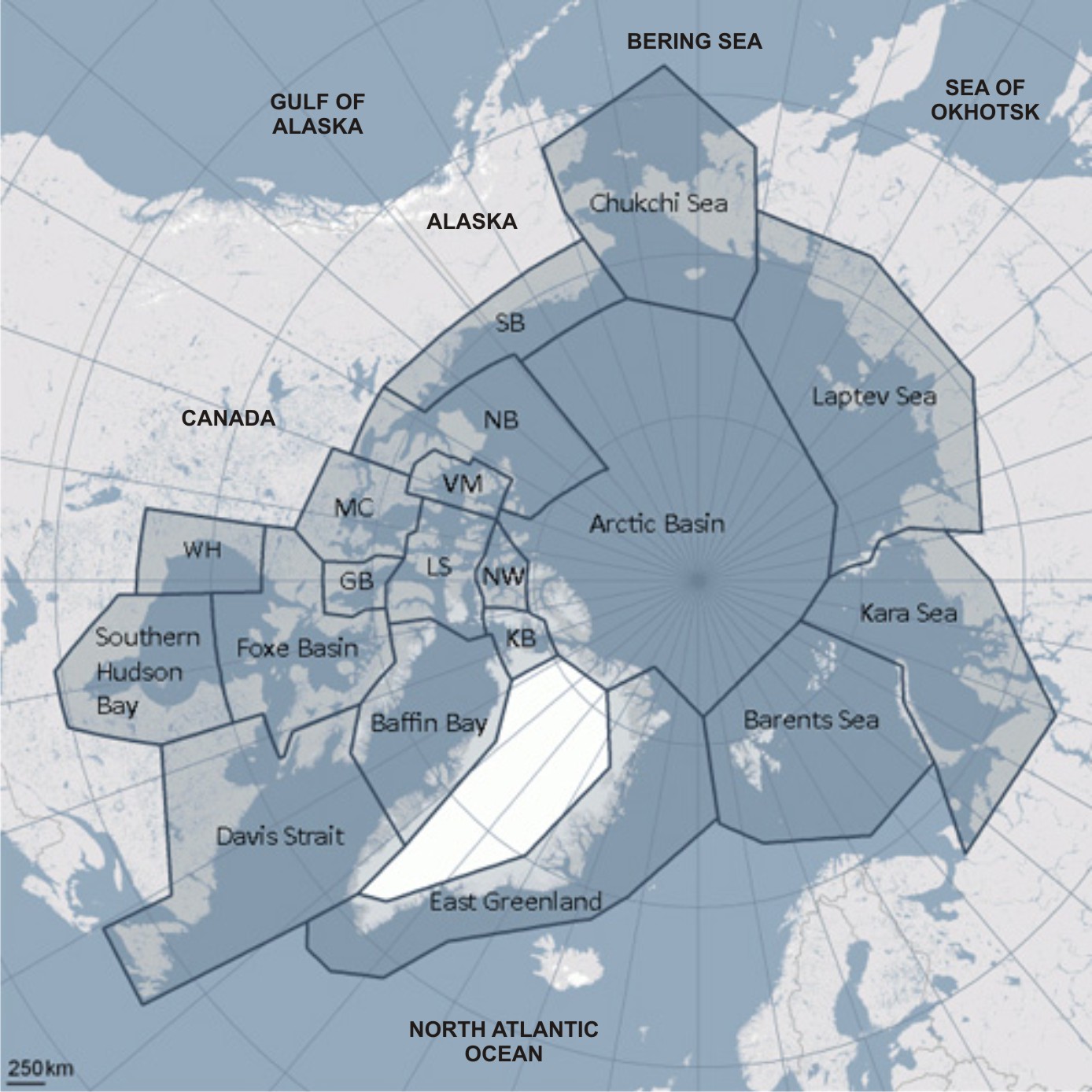
Polar bears' habitat is the sea ice near shore, throughout the circumpolar Arctic; the polar region around the North Pole (Derocher et al., 2004). Their preference is for dynamic sea ice of which the ice plateaus constantly shift, giving access to gaps of open water called Polynyas(Stirling, 1997). They vary in shape and size and are the product of several factors, including upwellings, current, wind or a combination of these (Stirling, 1997). These polynyas are the polar bears' main hunting environment, where they catch their most important source of food: ringed seals. For the latter, polynyas are the main habitat, with a necessity for easy access to larger ice surfaces to give birth to and nurse their offspring (Stirling and Derocher, 1993). In order for both these species to exist in a stable equilibrium, the existence of sea ice and polynyas is essential (Stirling, 2002).

However, climate change impacts their future species survival due to vanishing sea ice. There are several climate models that predict the extent of future arctic sea ice, which is difficult to model and thus there are differences between the results of individual studies. The overall consensus however, appears to be that "overall, climate is warming, total ice cover is decreasing at a significant rate, and that large parts of the polar basin may be largely or completely ice-free in as little as 100 years" (Derocher et al., 2004). Empirical evidence shows that between 1976 and 2006, sea ice declined with an annual average of 8.6%, and 2007 being the record year with the lowest extent of summer sea ice (Serreze et al., 2007). These are all indications of change affecting polar bear habitat: earlier annual ice break up, and later freeze up ((Derocher et al., 2004), shifting the seasonal activity for polar bears and seals.

For polar bears, late spring and early summer is the period most crucial to survival. It is the time they do on-ice feeding on seals, storing body fat for the on-land period of fasting. When ice patterns progress as indicated above, the hunting period becomes shorter while the fasting period becomes longer. Also, due to increased drifting, the distance between ice plateaus will become larger and thus moving within its habitat will become more energy-consuming (Durner et al., 2009).
Derocher et al. estimated, based on averages from research in the Hudson Bay area, what this would do to the polar bear's ecology. Their results indicated that due to body mass loss, by 2100, most female polar bears would not have enough body fat to produce viable offspring, leading to extinction of the species (Derocher et al., 2004).

This is likely going to be accelerated by the non-availability of seals, whose population will decline because of lack of space for safe offspring bearing (Durner et al., 2009). This relationship between seal productivity and polar bear reproduction was already observed by Stirling in 2002. It is a commonly observed relationship in population ecology, made more comprehensible by the Lotka Volterra Predator Prey Model, though McLaren and Smith, 1985, warn the reader against its oversimplicity and lack of spacial parameters. Still, it is worthwhile in developing an understanding in the Polar Bear - Seal population dynamics and I'll do a brief discussion below in order to show you how all-encompassing an effect the sea ice decline will most likely have.

I am assuming some knowledge of the Lotka Volterra Model or a similar coupled differential equation model here. For an explanation, I recommend you refer to the following PAPER by Baigant, based at UCL. 
For an interest in mathematical ecology and population dynamics in general, I recommend Pastor's book Mathematical Ecology of Populations and Ecosystems. (Do mind: it's on its first edition, so includes many small mistakes in the equations. The theory is very thoroughly explained.) 


Figure 3: the Lotka Volterra Equation in its simplest form. 
Source: SOSMath

In which: 
R= Polar Bear Population Density
a= Polar Bear Growth Rate
alpha= Probability of killing a seal
F= Seal Population Density
Beta = probability of killing x polar bear's efficiency of conversion into biomass
b = random death rate

As is illustrated by the equation and what the symbols represent, a decline in sea ice will impact the population dynamics in various ways.
The decline of seal habitat influences productivity, thus F its population density, and alpha and beta, due to the altered polar bear's probability of killing seal.
The polar bear's mass, which as explained above will decline and lead to less offspring, impacts a the polar bear growth rate.
This all will have a total effect on the two population densities, and thus shift the equilibrium, potentially away from a stable coexistence equilibrium.

Time will tell how both polar bears and seals will (cease to) exist with declining sea ice. I hope you enjoyed the post and it got you thinking on the 'snowball effect' of climate change: its impact on one species affects another.