Hi all,
A short post to let you know I'll be off to the most amazing, nerdy, outdoorsy and scary conference I've been to so far. The Graduate Climate Conference is alternately organised by UW and MIT, and this year will take place close to Seattle, from 30.10 - 02.11.
I'll be presenting my poster on numerical modelling of glacier processes within the cryosphere section, and be listening to a wide range of graduate research in the climate sciences. I'm excited, and keep you updated, provided I don't have a close encounter with a bear or an abyss during our hike on Mt. Rainier.
For more info: http://www.graduateclimateconference.com/
Cheers!

Monday, 27 October 2014

Wednesday, 1 October 2014
The death of a legend: JP Auclair
It's with a sad heart that I write this new blog post after having been away for a while. However, I could not let this go without writing about it: we lost a wonderful human being and a huge inspiration yesterday.
JP Auclair, professional skier and climate change activist, died in an avalanche in Chile yesterday. An article on Powder's website does JP and Andreas Fransson's death more justice than I could, so read about it HERE.
Not only was JP a fantastic skier, who was looked up to and admired by many who share his passion for the sport, but he was also a hugely important influencer in the battle against climate change. With his organisation ALPINE INITIATIVES, he engaged the snow sports community in becoming aware of environmental and climate change issues, and to actively partake in mitigating them. The organisation's words: "AI engages the snow sports community in sustainable initiatives that connect people and planet."


I was lucky enough to communicate with JP about possibly setting up a project with AI, and getting my artwork involved for the website. In his last e-mail he told me he was on the road a lot, and just wanted to let me know not to worry if I didn't hear back for a while: he was excited to get this going but didn't have a lot of time at the moment.
I am still excited about setting up a project with AI, and am certain that there are dedicated people out there, ready to continue his work. But there are many grieving today, for their personal loss, for the snow sports community and for all he wanted to do but can't anymore.
JP, ski some clouds for us up there, and trust us to continue what you so wonderfully started. You won't be forgotten. On that note: have a look at the AI website guys, and see how YOU can get involved.
JP Auclair, professional skier and climate change activist, died in an avalanche in Chile yesterday. An article on Powder's website does JP and Andreas Fransson's death more justice than I could, so read about it HERE.
Not only was JP a fantastic skier, who was looked up to and admired by many who share his passion for the sport, but he was also a hugely important influencer in the battle against climate change. With his organisation ALPINE INITIATIVES, he engaged the snow sports community in becoming aware of environmental and climate change issues, and to actively partake in mitigating them. The organisation's words: "AI engages the snow sports community in sustainable initiatives that connect people and planet."


Source: AI website. Bottom: ski collaboration with
Armada, the brand Auclair co-founded
I was lucky enough to communicate with JP about possibly setting up a project with AI, and getting my artwork involved for the website. In his last e-mail he told me he was on the road a lot, and just wanted to let me know not to worry if I didn't hear back for a while: he was excited to get this going but didn't have a lot of time at the moment.
I am still excited about setting up a project with AI, and am certain that there are dedicated people out there, ready to continue his work. But there are many grieving today, for their personal loss, for the snow sports community and for all he wanted to do but can't anymore.
JP, ski some clouds for us up there, and trust us to continue what you so wonderfully started. You won't be forgotten. On that note: have a look at the AI website guys, and see how YOU can get involved.
Wednesday, 25 June 2014
Climate Change and rainy Midsommars
Hi all,
Back from Sweden and its summer weather: cold and rainy! But I spent Midsummer with a bunch of beautiful, intoxicated people, which made it all so worth it. However, having an international group of people inevitably led to comparisons with weather in other countries: Austria, England, the Netherlands, Germany.. and to people coming to the conclusion that it "didn't use to be like this".
So even though this rainy Midsummer weekend is part of climate variability, not climate change (for an explanation, read this post), there is some truth to the statement that things are changing. So what might this mean for future midsummer festivities? Yep: more rain jackets and scarves, and if we're lucky, sometimes a bikini.

As mentioned before, climate change will mainly manifest itself through the earth's hydro-ecological system, which includes changes in precipitation. Each type of climate will respond differently, based on its characteristics and geographic location. Geographic location influences not only solar irradiation, but also the effect ocean- and wind global circulations have. Swedish climate is generally temperate, with three official climate distinctions in the different parts. From South to North: oceanic, humid continental and subarctic. Because of the warming impact of the Gulf Stream on Sweden, its climate is much milder than other locations around the same latitude. Because of this important influence, large circulation variability because of climate change is likely to have significant effect on Swedish climate and weather (Busuioc et al., 2001).
Depending on the use of climate model, sea level pressure variability will have a moderate to severe effect. As researched by e.g. Busuioc et al. using HadCM2, and Bergström et al., (2001) using several General Circulation Models within the project SWECLIM, the definitive simulated effects depend on optimal statistical downscaling and vary with which model is used. Here are some general conclusions though:
Back from Sweden and its summer weather: cold and rainy! But I spent Midsummer with a bunch of beautiful, intoxicated people, which made it all so worth it. However, having an international group of people inevitably led to comparisons with weather in other countries: Austria, England, the Netherlands, Germany.. and to people coming to the conclusion that it "didn't use to be like this".
So even though this rainy Midsummer weekend is part of climate variability, not climate change (for an explanation, read this post), there is some truth to the statement that things are changing. So what might this mean for future midsummer festivities? Yep: more rain jackets and scarves, and if we're lucky, sometimes a bikini.

Source: www.thelocal.se
As mentioned before, climate change will mainly manifest itself through the earth's hydro-ecological system, which includes changes in precipitation. Each type of climate will respond differently, based on its characteristics and geographic location. Geographic location influences not only solar irradiation, but also the effect ocean- and wind global circulations have. Swedish climate is generally temperate, with three official climate distinctions in the different parts. From South to North: oceanic, humid continental and subarctic. Because of the warming impact of the Gulf Stream on Sweden, its climate is much milder than other locations around the same latitude. Because of this important influence, large circulation variability because of climate change is likely to have significant effect on Swedish climate and weather (Busuioc et al., 2001).
Depending on the use of climate model, sea level pressure variability will have a moderate to severe effect. As researched by e.g. Busuioc et al. using HadCM2, and Bergström et al., (2001) using several General Circulation Models within the project SWECLIM, the definitive simulated effects depend on optimal statistical downscaling and vary with which model is used. Here are some general conclusions though:
- For all seasons, there is a correlation between sea level pressure and precipitation
- Especially summer and autumn precipitation will increase
- HadCM2 and ECHAM4 respectively predict a 4.5% and 6.9% increase in annual precipitation.
- The North and Middle of Sweden will get wetter, the South will locally get dryer
- Weather will become more extreme, meaning more highs and lows in especially summer
So what can we gather from this? There is a lot more research going on about this topic, but the general consensus is for Sweden that weather will become more wet, with some extreme outliers of increased temperature and solar irradiation.
So about Midsummer: be prepared to celebrate in the rain, especially north of Stockholm. We might also get lucky some years, and be swimming and tanning while enjoying this wonderful, crazy celebration. But really, who cares: it's always good in its own way. Glad Midsommar, see you next year!
Thursday, 12 June 2014
Why we should not go on "Saving the the Planet"
Hi all,
First off, I have a new favourite website: NASA Climate Change FAQ. And even though I should be struggling my way through writing an add-on script in Python, I would like to share this with you. Go HERE!
It's a great variety of questions and answers, but in my opinion, an important one is missing. Climate change and glaciology have been prominent in the media over the past weeks, with the discovery of hidden canyons beneath Greenland and the irreversibility of West Antarctic Glacier Melt. And of course you then here the outcry "We need to save the planet! Look at what we're doing to it!"
My question and answer for today: 'Why is it NOT about "saving the planet"?'
The short answer will be in the words of comedian George Carlin, who's much more eloquent than I am and argues the same case.
As for the longer answer.. Saving the planet is an abstract notion that cannot engage more than a few, as saving (ie. preserving in its current/ some previous state) would require putting a stop to all anthropogenic activity. It is however, almost too easy to lose oneself in this abstract notion, because planet earth is the only home we know and have. In all of its beauty and usefulness providing ecological services, it seems to go against our instincts to say "It's not about saving the planet."
In 2001, De Paiva Duarte publishes an interesting article regarding the notion of the planet in an environmental protection mindset: "'Save the earth' or 'manage the earth'? The politics of environmental globality in a high modernity" (De Paiva Duarte, 2001). In this paper, he addresses exactly the question of this blog post, and labels the two streams of thinking 'ecocentric globality' vs. 'instrumental globality'. Ecocentric globality can be summarised as a worldview considering the earth a living thing, which humans are morally obliged to preserve. Instrumental globality conceives the planet as a system of resources, needing to protected for human consumption (De Paiva Duarte, 2001).
Danger lies in either of these world views, with on the one hand prioritising the preservation of planet earth regardless of the knowledge that it will find a new equilibrium. The danger in the instrumental globality exists in the disregard of the long term, extracting all the earth provides and hereby making 'her' (Gaia) unliveable for the future.
In my small opinion, the most important issue is to preserve earth so that it remains fit for humans to live under the rule of law. This means climate and environmental change mitigation to an extent that huge migration and thus political chaos can largely be avoided. Don't "save the planet" for the planet's sake. But for life under the rule of law, on this beautiful organic spaceship.
First off, I have a new favourite website: NASA Climate Change FAQ. And even though I should be struggling my way through writing an add-on script in Python, I would like to share this with you. Go HERE!
It's a great variety of questions and answers, but in my opinion, an important one is missing. Climate change and glaciology have been prominent in the media over the past weeks, with the discovery of hidden canyons beneath Greenland and the irreversibility of West Antarctic Glacier Melt. And of course you then here the outcry "We need to save the planet! Look at what we're doing to it!"
My question and answer for today: 'Why is it NOT about "saving the planet"?'
The short answer will be in the words of comedian George Carlin, who's much more eloquent than I am and argues the same case.
"The planet will shake us off like a bad case of fleas. The planet will be here a long, Long, LONG time after we're gone."
-- George Carlin
As for the longer answer.. Saving the planet is an abstract notion that cannot engage more than a few, as saving (ie. preserving in its current/ some previous state) would require putting a stop to all anthropogenic activity. It is however, almost too easy to lose oneself in this abstract notion, because planet earth is the only home we know and have. In all of its beauty and usefulness providing ecological services, it seems to go against our instincts to say "It's not about saving the planet."
In 2001, De Paiva Duarte publishes an interesting article regarding the notion of the planet in an environmental protection mindset: "'Save the earth' or 'manage the earth'? The politics of environmental globality in a high modernity" (De Paiva Duarte, 2001). In this paper, he addresses exactly the question of this blog post, and labels the two streams of thinking 'ecocentric globality' vs. 'instrumental globality'. Ecocentric globality can be summarised as a worldview considering the earth a living thing, which humans are morally obliged to preserve. Instrumental globality conceives the planet as a system of resources, needing to protected for human consumption (De Paiva Duarte, 2001).
Danger lies in either of these world views, with on the one hand prioritising the preservation of planet earth regardless of the knowledge that it will find a new equilibrium. The danger in the instrumental globality exists in the disregard of the long term, extracting all the earth provides and hereby making 'her' (Gaia) unliveable for the future.
In my small opinion, the most important issue is to preserve earth so that it remains fit for humans to live under the rule of law. This means climate and environmental change mitigation to an extent that huge migration and thus political chaos can largely be avoided. Don't "save the planet" for the planet's sake. But for life under the rule of law, on this beautiful organic spaceship.
Tuesday, 13 May 2014
Pitztaler Gletscher: Melting over Time
Hi there,
Talking about somewhere close to home today: the Pitztaler Gletscher (Lat 46.919, Lon 10.863). This is a ski resort in the Ötztaler Alps, which because of year-round snow availability is especially popular for summer shredding. However, considering the overall negative mass balance of alpine glaciers, it is safe to assume also this glacier's ablation is greater than its accumulation. How much exactly, I'll show you below by using the Innsbruck based Institute of Meteorology and Geophysics (IMGI) glacier inventory.
The ski resort Pitztaler Gletscher (figure 1) stretches across two glaciers: the Brunnenkogelferner and part of the Mittelbergferner (figure 2). Their elevation, ranging from ca. 1500 - 3440 m., guarantees snow availability. While we do not have to worry yet, snow from the glaciers is decreasing rapidly, a process that is projected to intensify under the influence of climate change. As the IPCC AR5 report states, alpine regions are especially sensitive to temperature changes and longer ablation periods and will predictably undergo heavy snow and ice losses.


This process is documented in the IMGI Austrian glacier inventory, developed by M. Kuhn, J. Abermann and A. Lambrecht at the University of Innsbruc.
To view it, GIS shapefiles and csv data files can be retrieved for the years 1969, 1998 and 2006 respectively here (1969 and 1998) and here (2006, under 'other version'). From comparing area data and placing the layers over each other in ArcGIS or QGIS, the shrinking of the glacier can be clearly observed (figure 3). The data on area in km2 is in the table below.
Area Brunnenkogelferner (km2) Area Mittelbergferner (km2)
1969 1.831 11.055
1998 1.525 (-16.7%) 9.924 (-10.2%)
2006 1.417 (-22.6%) 9.615 (-13.0%)

As is displayed above, both glaciers have undergone significant shrinking since 1969, as have most Austrian glaciers. If you would like to know more, read THIS article by Abermann et al. (2009) or have a look at the glacier inventory yourself. As said before, this can be downloaded from the IMGI website. All you need is either ArcGIS, QGIS or another programme that reads shapefiles. Interesting also is a comparison with the Randolph Glacier Inventory or the World Glacier Inventory, for all of which shapefiles are available from the respective websites.
Talking about somewhere close to home today: the Pitztaler Gletscher (Lat 46.919, Lon 10.863). This is a ski resort in the Ötztaler Alps, which because of year-round snow availability is especially popular for summer shredding. However, considering the overall negative mass balance of alpine glaciers, it is safe to assume also this glacier's ablation is greater than its accumulation. How much exactly, I'll show you below by using the Innsbruck based Institute of Meteorology and Geophysics (IMGI) glacier inventory.
The ski resort Pitztaler Gletscher (figure 1) stretches across two glaciers: the Brunnenkogelferner and part of the Mittelbergferner (figure 2). Their elevation, ranging from ca. 1500 - 3440 m., guarantees snow availability. While we do not have to worry yet, snow from the glaciers is decreasing rapidly, a process that is projected to intensify under the influence of climate change. As the IPCC AR5 report states, alpine regions are especially sensitive to temperature changes and longer ablation periods and will predictably undergo heavy snow and ice losses.
Figure 1. The Pitztaler Gletscher Ski Resort Map. Source
Figure 2. Pitztaler Gletscher on Satellite Imagery. Source
This process is documented in the IMGI Austrian glacier inventory, developed by M. Kuhn, J. Abermann and A. Lambrecht at the University of Innsbruc.
To view it, GIS shapefiles and csv data files can be retrieved for the years 1969, 1998 and 2006 respectively here (1969 and 1998) and here (2006, under 'other version'). From comparing area data and placing the layers over each other in ArcGIS or QGIS, the shrinking of the glacier can be clearly observed (figure 3). The data on area in km2 is in the table below.
Area Brunnenkogelferner (km2) Area Mittelbergferner (km2)
1969 1.831 11.055
1998 1.525 (-16.7%) 9.924 (-10.2%)
2006 1.417 (-22.6%) 9.615 (-13.0%)
Figure 3. Glacier Area in 1969 (blue), 1998 (orange) and 2006 (purple)
As is displayed above, both glaciers have undergone significant shrinking since 1969, as have most Austrian glaciers. If you would like to know more, read THIS article by Abermann et al. (2009) or have a look at the glacier inventory yourself. As said before, this can be downloaded from the IMGI website. All you need is either ArcGIS, QGIS or another programme that reads shapefiles. Interesting also is a comparison with the Randolph Glacier Inventory or the World Glacier Inventory, for all of which shapefiles are available from the respective websites.
Research Update
Hello all,
I'd like to share a series of posts with you during this summer, keeping you up to date on the research I'm currently a tiny, tiny part of. I'm lucky enough to have been offered a spot in Innsbruck for the coming months, doing the research for my thesis. So right now I have a beautiful view of the snowy Patscherkofel, from the Innsbruck office.
In the project 'Multiscale Snow/Icemelt Discharge Simulation into Alpine Reservoirs' the spatial and temporal melt and discharge patterns of a glacierised catchment area in the region of Tyrol (Austria/ Italy) are investigated.
Coupling a physically based snow/ice model, a discharge model and, in the future, a glacier evolution model, snow distribution and discharge is simulated. Airborne laser scan and station data from the catchment form vital tools for calibration and validation of the models.
Important goals for the project include the extrapolation to a larger temporal and spatial scale, assessing glacier melt, snow distribution and consequent river discharge under climate change scenarios as described by the IPCC AR5 representative concentration pathways (RCPs).

My teeny-tiny contribution to all of this is, for now, looking at the historic area changes of a glaciers in the Ötztaler Alps. This is done using several available glacier inventories, comparing the inventories' stored data and creating a GIS based 'area over time' map. Using the models mentioned above, I/we will run a hindcast of the catchment, once with station and once with interpolated satellite data. As a result, coupled model performance will be evaluated. Exciting stuff!
I'd like to share a series of posts with you during this summer, keeping you up to date on the research I'm currently a tiny, tiny part of. I'm lucky enough to have been offered a spot in Innsbruck for the coming months, doing the research for my thesis. So right now I have a beautiful view of the snowy Patscherkofel, from the Innsbruck office.
In the project 'Multiscale Snow/Icemelt Discharge Simulation into Alpine Reservoirs' the spatial and temporal melt and discharge patterns of a glacierised catchment area in the region of Tyrol (Austria/ Italy) are investigated.
Coupling a physically based snow/ice model, a discharge model and, in the future, a glacier evolution model, snow distribution and discharge is simulated. Airborne laser scan and station data from the catchment form vital tools for calibration and validation of the models.
Important goals for the project include the extrapolation to a larger temporal and spatial scale, assessing glacier melt, snow distribution and consequent river discharge under climate change scenarios as described by the IPCC AR5 representative concentration pathways (RCPs).
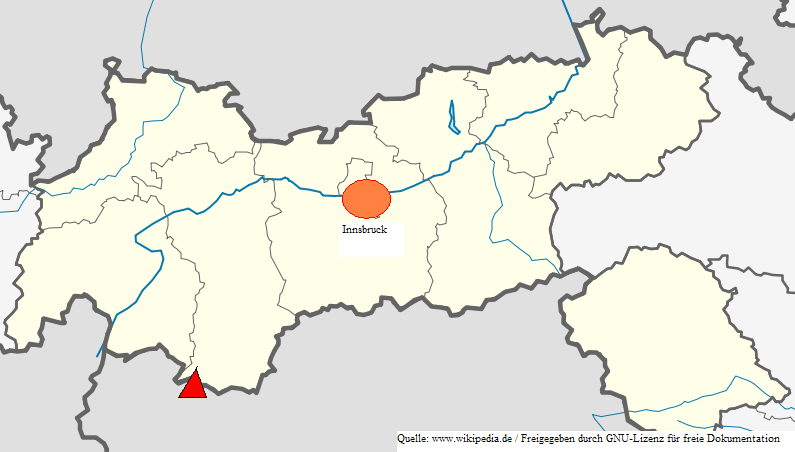
Orange dot: Innsbruck, red arrow: catchment area (roughly). Source
My teeny-tiny contribution to all of this is, for now, looking at the historic area changes of a glaciers in the Ötztaler Alps. This is done using several available glacier inventories, comparing the inventories' stored data and creating a GIS based 'area over time' map. Using the models mentioned above, I/we will run a hindcast of the catchment, once with station and once with interpolated satellite data. As a result, coupled model performance will be evaluated. Exciting stuff!
Friday, 7 March 2014
David MacKay and the IET's 2050 Pathways
Dear all,
First of all: sorry for the long posting silence. I could give you a long list of excuses, but I am not going to. I'm back! Today's topic: not directly related to the cold, nor to climate science per se. But on the most important climate change mitigation issue: energy. Demand, supply and storage: the 2050 pathways discussed by a group of experts (and some semi-knowledgeable-lucky-to-be-there people like myself).
Yesterday, I had one of these moments every scientist needs once in a while. The realisation: "Yes, this is why I want to be a part of the scientific community. This is what I am set out to do with my life."
Why this moment happened? Because I got to attend the Institution of Engineering and Technology Clerk Maxwell lecture at the beautiful venue of the Royal Institution of Great Britain. There I was: alone, intimidated and about 30 years younger than the average participant.
The speaker for this event was David J.C. MacKay, chief scientific advisor to the Department of Energy and Climate Change and Regius Professor in Engineering at the University of Cambridge.
His book "Sustainable Energy Without the Hot Air" I consider to be the best book on the topic of renewable energy, because it quantifies the issues at hand, rather than using lengthy and empty 'green lobby' explanations. As the book's motto says: "Numbers, not Adjectives." It is freely available for you to download as a PDF here, which I highly recommend you do. This book is also one of the reasons I got into climate science in the first place, so I was excited to hear David MacKay speak.
The lecture was centred around the 2050 Energy Pathways, meaning the way we will have to change our energy use and supply if the UK wants to reach its target of an 80% reduction in CO2 emission, from the 1990 baseline (DECC). In order to simulate several ways to reach these targets, the UK 2050 Calculator was developed. It is a tool that, as MacKay says, "Allows you to be the secretary of state or dictator of Britain for a bit." It is pretty self-explanatory, so have a look and play around with it HERE before you read the rest of this post.

MacKay started out with a brief explanation on climate science, being especially clear that natural variability occurs, the current hiatus is statistically meaningless and surface temperature is the most useful indicator of global warming. He did not dwell on the topic for long, because he (rightly) assumed that the crowd agreed climate change is a global challenge that needs to be addressed.
The next hour was devoted to constructing an "IET Pathway", involving discussion within the room and for each lever choosing the levels we thought desirable and realistic. Especially high-impact levers are e.g. thermostat setting and the choice for or against nuclear power.
However, by the end of the lecture - by no means end of the discussion, but we ran out of time - we did not succeed in reaching the target of an 80% emission reduction. This, to me, is worrying for mainly these two reasons:
1) The majority of participants lasts night were engineers and scientists with the 'prerequisites' that they understand the threat climate change poses, understand energy demand and supply, and most importantly understand the importance of immediate action. They applied their expertise with the full intention of reaching the target, and through majority voting we reached answers that quite fairly represented the ideas of the crowd.
If this group could not even reach the target, factor in Britain's real life population. This population includes many that either don't understand the topic, do not care about it, or do not care enough to change their behaviour - all three necessary in order to actually succeed. Then there are the ones that understand, but value their personal short-term (ie. human life span) gain over future populations' problems. Considering the behavioural changes that would have to be made within the majority of British homes - thermostat down to 18C, extra insulation, taking the train instead of the BMW - and the likely protest against them, I am pessimistic.
2) In our "let's-make-Britain-better" discussion we did not consider policy implementation problems or cost. Our big plans for nuclear power for example - I'm all for it - are highly difficult in terms of politics. Thank goodness we don't have an Angela Merkel size problem here, but still, substantial trouble could stand in the way of building ca. 65 GW capacity worth of new nuclear power stations.
Second, the costs of covering every single south-facing roof in Britain? Building new railway tracks because train travel needs to increase by 115%? Changing the infrastructure of every major city in Britain because we need a 10-fold (!) increase in cycling? (For all you pro-London-cycling: no, it is not safe enough yet. Nope. No way.) These are immense costs we're looking at.
Cost is a part of the calculator you can play around with, which I will definitely do, but was not part of our discussion.
In conclusion, I want to emphasize that regardless of how unlikely it is that the entire British population would want to work with our decisions, political issues and huge attached costs, we initially did not reach the target. We did finally reach the goal through MacKay deciding we would all just be a little more ambitious in terms of shipping, aviation and electricity storage. Our final IET Lecture Patyway you can find HERE.
The lecture was inspiring, it re-confirmed my determination to become a scientist, yet it also left me with a reality check once again of how incredibly difficult the task ahead of us is.
For now: please play around with the calculator and share your results with me. Also have a look at David MacKay's own blogpost on the evening, right here.
First of all: sorry for the long posting silence. I could give you a long list of excuses, but I am not going to. I'm back! Today's topic: not directly related to the cold, nor to climate science per se. But on the most important climate change mitigation issue: energy. Demand, supply and storage: the 2050 pathways discussed by a group of experts (and some semi-knowledgeable-lucky-to-be-there people like myself).
Yesterday, I had one of these moments every scientist needs once in a while. The realisation: "Yes, this is why I want to be a part of the scientific community. This is what I am set out to do with my life."
Why this moment happened? Because I got to attend the Institution of Engineering and Technology Clerk Maxwell lecture at the beautiful venue of the Royal Institution of Great Britain. There I was: alone, intimidated and about 30 years younger than the average participant.
The speaker for this event was David J.C. MacKay, chief scientific advisor to the Department of Energy and Climate Change and Regius Professor in Engineering at the University of Cambridge.
His book "Sustainable Energy Without the Hot Air" I consider to be the best book on the topic of renewable energy, because it quantifies the issues at hand, rather than using lengthy and empty 'green lobby' explanations. As the book's motto says: "Numbers, not Adjectives." It is freely available for you to download as a PDF here, which I highly recommend you do. This book is also one of the reasons I got into climate science in the first place, so I was excited to hear David MacKay speak.
The lecture was centred around the 2050 Energy Pathways, meaning the way we will have to change our energy use and supply if the UK wants to reach its target of an 80% reduction in CO2 emission, from the 1990 baseline (DECC). In order to simulate several ways to reach these targets, the UK 2050 Calculator was developed. It is a tool that, as MacKay says, "Allows you to be the secretary of state or dictator of Britain for a bit." It is pretty self-explanatory, so have a look and play around with it HERE before you read the rest of this post.
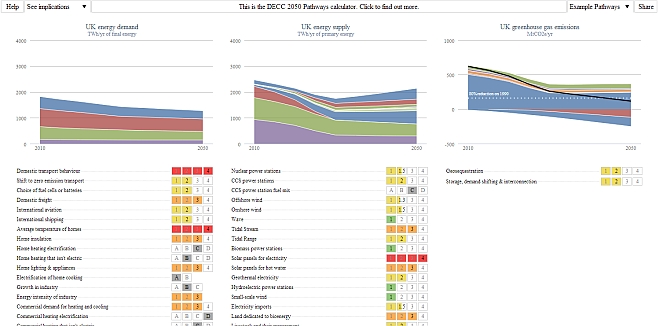
This is what the pathway calculator looks like. Source
MacKay started out with a brief explanation on climate science, being especially clear that natural variability occurs, the current hiatus is statistically meaningless and surface temperature is the most useful indicator of global warming. He did not dwell on the topic for long, because he (rightly) assumed that the crowd agreed climate change is a global challenge that needs to be addressed.
The next hour was devoted to constructing an "IET Pathway", involving discussion within the room and for each lever choosing the levels we thought desirable and realistic. Especially high-impact levers are e.g. thermostat setting and the choice for or against nuclear power.
However, by the end of the lecture - by no means end of the discussion, but we ran out of time - we did not succeed in reaching the target of an 80% emission reduction. This, to me, is worrying for mainly these two reasons:
1) The majority of participants lasts night were engineers and scientists with the 'prerequisites' that they understand the threat climate change poses, understand energy demand and supply, and most importantly understand the importance of immediate action. They applied their expertise with the full intention of reaching the target, and through majority voting we reached answers that quite fairly represented the ideas of the crowd.
If this group could not even reach the target, factor in Britain's real life population. This population includes many that either don't understand the topic, do not care about it, or do not care enough to change their behaviour - all three necessary in order to actually succeed. Then there are the ones that understand, but value their personal short-term (ie. human life span) gain over future populations' problems. Considering the behavioural changes that would have to be made within the majority of British homes - thermostat down to 18C, extra insulation, taking the train instead of the BMW - and the likely protest against them, I am pessimistic.
2) In our "let's-make-Britain-better" discussion we did not consider policy implementation problems or cost. Our big plans for nuclear power for example - I'm all for it - are highly difficult in terms of politics. Thank goodness we don't have an Angela Merkel size problem here, but still, substantial trouble could stand in the way of building ca. 65 GW capacity worth of new nuclear power stations.
Second, the costs of covering every single south-facing roof in Britain? Building new railway tracks because train travel needs to increase by 115%? Changing the infrastructure of every major city in Britain because we need a 10-fold (!) increase in cycling? (For all you pro-London-cycling: no, it is not safe enough yet. Nope. No way.) These are immense costs we're looking at.
Cost is a part of the calculator you can play around with, which I will definitely do, but was not part of our discussion.
In conclusion, I want to emphasize that regardless of how unlikely it is that the entire British population would want to work with our decisions, political issues and huge attached costs, we initially did not reach the target. We did finally reach the goal through MacKay deciding we would all just be a little more ambitious in terms of shipping, aviation and electricity storage. Our final IET Lecture Patyway you can find HERE.
The lecture was inspiring, it re-confirmed my determination to become a scientist, yet it also left me with a reality check once again of how incredibly difficult the task ahead of us is.
For now: please play around with the calculator and share your results with me. Also have a look at David MacKay's own blogpost on the evening, right here.
Subscribe to:
Posts (Atom)